
www.waterplant.tech
24
'26
Written on Modified on
Tertiary Treatment Infrastructure for Pesticide and Ammonia Removal
Barhale completed an integrated water recycling infrastructure upgrade for Anglian Water to address emerging agricultural contaminants and stringent environmental compliance regulations.
www.barhale.co.uk
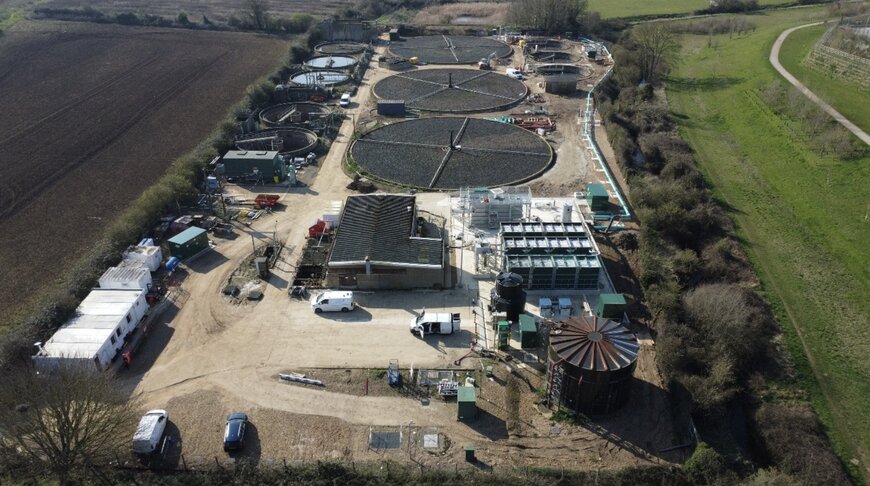
Civil engineering contractor Barhale collaborated with utility provider Anglian Water to implement advanced tertiary treatment systems at the Raunds Water Recycling Centre. The project targets the removal of specific emerging contaminants and the enhancement of ammonia processing capacity within municipal wastewater management applications.
Client Industry and Operational Challenges
Anglian Water operates within the municipal water management and environmental engineering sector. At the Raunds Water Recycling Centre near Wellingborough, the utility faced tightening environmental regulations that mandated improved filtration of trace elements in local watercourses. A primary operational challenge was the required extraction of Cypermethrin, a pesticide frequently utilized in agricultural and veterinary products that presents toxicity risks to aquatic invertebrates. Concurrently, the facility needed to upgrade its existing processing infrastructure to manage ammonia levels and strictly comply with a newly introduced regulatory consent limit of 1.5 milligrams per liter (mg/l).
Selected Tertiary Treatment Systems
To resolve these compliance requirements, Anglian Water utilized its @one Alliance framework to deploy specialized filtration and aeration technologies engineered by Barhale. For the targeted removal of Cypermethrin, the technical solution centers on a custom-designed cloth filter mechanism integrated with a ferric dosing package. This extraction system is supported by a 30-cubic-meter storage tank and downstream dosing pumps, ensuring continuous and precise chemical application to reduce the pesticide to highly diluted concentrations.
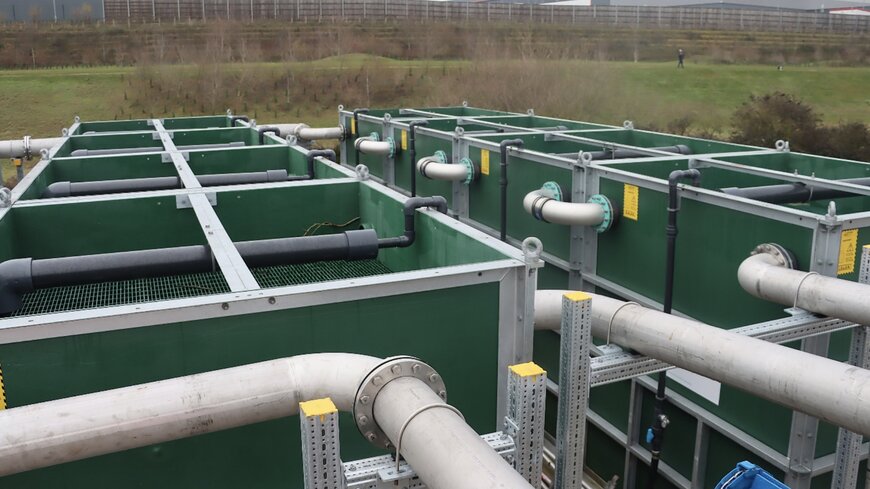
To address the stringent ammonia constraints, the engineering team integrated 12 modular nitrifying Submerged Aerated Filter (SAF) units. The facility selected this specific architecture to establish a scalable and flexible ammonia removal capacity. The SAF installation is driven by dedicated air blowers and a newly installed motor control cabinet, which regulate aeration levels and maintain automated process control throughout the treatment cycle.
Infrastructure Deployment and Integration
The £7.8 million site upgrade required significant physical integration to align the new tertiary systems with existing facility operations. Barhale managed the civil engineering deployment, constructing the requisite structural bases, interconnecting pipework, and dedicated maintenance access routes across the site. To systematically manage fluid transfers to the new tertiary processes, the deployment team installed a new interstage pumping station, establishing consistent flow rates and preventing bottlenecks within the recycling center's overall processing architecture.
Measurable Impact and Process Stability
The deployment of the integrated treatment systems allows the Raunds facility to reliably achieve the 1.5 mg/l ammonia threshold required by environmental legislation. Furthermore, the combination of cloth filtration and ferric dosing structurally extracts trace quantities of Cypermethrin, preventing its dispersion into the wider ecosystem. Regarding the project's technical rationale, Szadrach Peplowski, Site Manager at Barhale, indicated that the engineered infrastructure establishes immediate regulatory compliance while introducing targeted filtration technologies specifically designed to isolate emerging agricultural contaminants and maintain long-term facility resilience.
Edited by Aishwarya Mambet, Induportals Editor, with AI assistance.
www.barhale.com
